The Gambia is the smallest country in mainland Africa: a strip of land about 480 km long and rarely more than 50 km wide, wrapped around the lower River Gambia and surrounded on three sides by Senegal. Roughly three million people live there, most of them within thirty kilometres of the coast.
For visitors it offers an unusual combination — a six-hour flight from northern Europe, guaranteed winter sunshine, English as the official language, no time difference from the UK, and a culture that is welcoming in a way that survives the tourism. It is not a luxury destination and it is not a wilderness destination. It is somewhere you go to see how a West African country actually works, with a good beach attached.
The essentials at a glance
| Capital | Banjul (population ~30,000); the largest urban area is Serrekunda |
|---|---|
| Language | English is official; Mandinka, Wolof, Fula, Jola and Serahule widely spoken |
| Currency | Gambian dalasi (GMD, D) |
| Time zone | GMT all year — no time difference from the UK, one hour behind most of Europe |
| Flight time | About 6 hours from London, Brussels, Amsterdam or Barcelona |
| Airport | Banjul International (BJL), 20–35 minutes from the coastal hotels |
| Electricity | 230V, UK-style three-pin Type G plugs |
| Dry season | November to May — the main tourist season |
| Rainy season | June to October — hot, humid, green and much cheaper |
Visas, entry and health
Entry requirements depend on your nationality. Citizens of ECOWAS member states, the United Kingdom and a number of Commonwealth and European countries can enter visa-free for tourism; others can obtain a visa in advance or, in some cases, on arrival. These rules change, so always confirm with your nearest Gambian High Commission or Embassy before booking rather than relying on a travel article.
A yellow fever vaccination certificate is required if you are arriving from, or have recently transited, a country with risk of yellow fever transmission. Many travellers are vaccinated anyway as a precaution.
Malaria is present throughout the country, year-round, with higher risk inland and during and just after the rains. Antimalarial prophylaxis is standard advice for visitors — speak to a travel clinic six to eight weeks before you go — and bite prevention (repellent, long sleeves after dusk, nets) matters just as much as the tablets.
Bring any prescription medication you need in its original packaging. Pharmacies on the coast are reasonably stocked for common items but do not rely on finding a specific brand.
Money: the dalasi, cards and cash
The currency is the Gambian dalasi (GMD, written D). It is a closed currency — you cannot buy it before you travel and you should not try to take it out — so plan to change money on arrival.
The Gambia runs on cash. Hotels, the larger restaurants on the Senegambia strip and a few supermarkets take cards; markets, taxis, beach bars, site entry fees, guides and tips do not. ATMs exist along the coast and are often but not always working; take a backup card and some euros, pounds or dollars in cash as a fallback.
Change money at a bank or a licensed bureau de change rather than with someone who approaches you on the street. Rates at the bureaux on the Senegambia strip are usually better than at the airport or hotel desks.
Tipping is expected and appreciated: roughly 10% in restaurants that do not add service, a few hundred dalasi for a day guide, small notes for porters and site guides.
Getting around
Almost nobody rents a car. Roads on the coast are decent and upcountry roads are much improved, but unlit junctions, livestock, police checkpoints and unpredictable driving make it more effort than it is worth for a one-week trip.
What you use instead:
- Green tourist taxis — licensed, metered by zone and available outside every hotel. Best value chartered by the half or full day. Agree the price before you get in.
- Yellow taxis — shared local taxis running fixed routes for a few dalasi. Cheap, crowded and perfectly usable.
- Gelly-gellys — the yellow-and-green minibuses that carry most Gambians between towns. Very cheap, very slow, an experience in itself.
- The Banjul–Barra ferry — the crossing to the north bank. Chaotic, atmospheric and subject to long waits; most tours build the wait into the schedule.
- Organised tours — with hotel pickup, and the way essentially everyone reaches the inland and upriver sites.
Food and drink
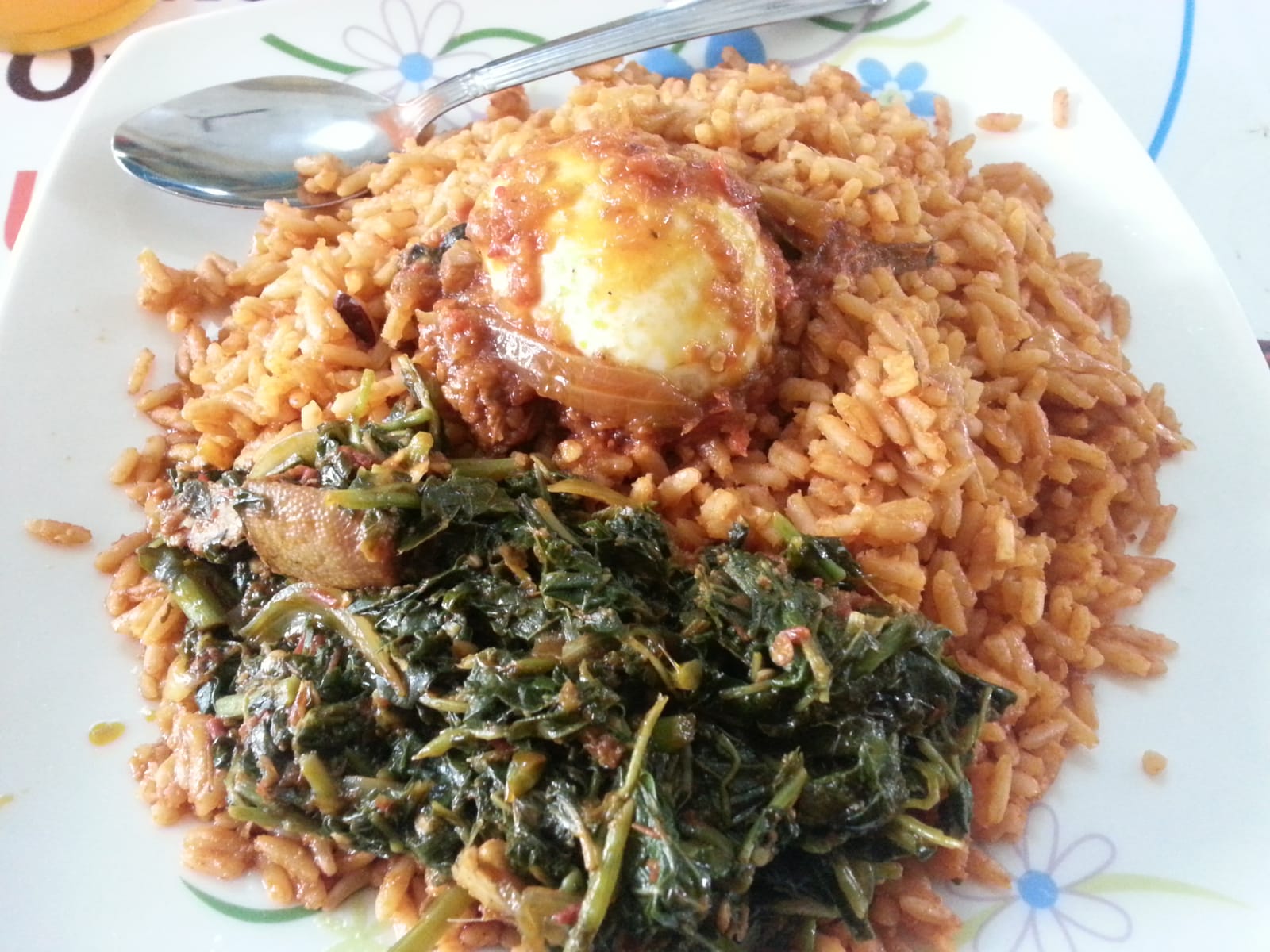
Gambian cooking is West African home cooking: one pot, rice, fish or meat, and a sauce with real depth. The dishes to look for are benachin (rice cooked in a tomato-and-fish stock — the ancestor of jollof rice), domoda (groundnut stew, rich and slightly sweet), yassa (chicken or fish with a mountain of caramelised onion and lemon), superkanja (okra and palm oil) and afra, the grilled meat sold from roadside grills after dark.
On the coast you will also find good fresh fish — barracuda, ladyfish, butterfish, prawns — plus the full range of European tourist food along the Senegambia strip. Eating out is cheap by European standards even in the better restaurants.
Drink wonjo (hibiscus), baobab juice, ginger beer and, endlessly, attaya — strong green tea brewed and poured three times in a long social ritual. Alcohol is available despite the country being predominantly Muslim; JulBrew is the local lager.
Stick to bottled or filtered water, and be sensible about salad and ice outside the established restaurants.
Culture, etiquette and the “bumster” question
The Gambia is around 95% Muslim, with a long-standing and genuinely relaxed relationship with its Christian minority — Christmas and Tobaski are both national events. Dress modestly away from the beach: covered shoulders and knees for both sexes in towns, markets and villages. Swimwear is for the beach and the hotel pool only.
Greetings matter enormously. A handshake and a proper “how is the morning, how is the family” exchange before getting to business is not small talk, it is the basic unit of politeness. Learn salaam aleikum and the Mandinka i be ñaadi? and you will be met halfway every time.
Ask before photographing people, especially at markets, mosques and villages. Some will ask for a small payment; some will simply say no.
You will encounter “bumsters” — young men on the tourist beaches offering guiding, friendship, crafts or introductions. They are a nuisance rather than a threat, and the response that works is a friendly, firm and repeated refusal followed by walking on. Long conversations, guilt and evasive politeness all prolong it. Booking your excursions in advance removes most of the pressure entirely.
Safety
The Gambia has a low rate of violent crime and is one of the easier countries in the region for independent travellers. The realistic risks are opportunistic theft in crowded markets, road traffic, sun and heat, and mosquito-borne illness — in roughly that order of likelihood and reverse order of seriousness.
Practical measures: use licensed green taxis after dark, leave your passport in the hotel safe and carry a copy, do not flash phones or cash in markets, do not swim after drinking, and take the rip currents on the open Atlantic beaches seriously.
Check your own government’s current travel advice before you go — it is the only source that will be up to date on political developments.
What to pack
- High-factor sunscreen and a wide-brimmed hat — the sun here is stronger than the temperature suggests
- DEET-based insect repellent and long, light sleeves for dawn and dusk
- Antimalarial tablets and a basic first-aid kit including rehydration salts
- Binoculars, even if you are not a birder — you will use them daily
- A torch or head torch for power cuts
- Modest clothing for towns and villages; swimwear stays at the beach
- Small denomination notes once you have changed money — nobody has change
- A UK-style Type G plug adapter
- Reef-safe sunscreen and a reusable water bottle
- Your passport for any tour crossing into Senegal
A suggested week
A pattern that works well for a first seven-night trip on the coast, leaving plenty of beach time:
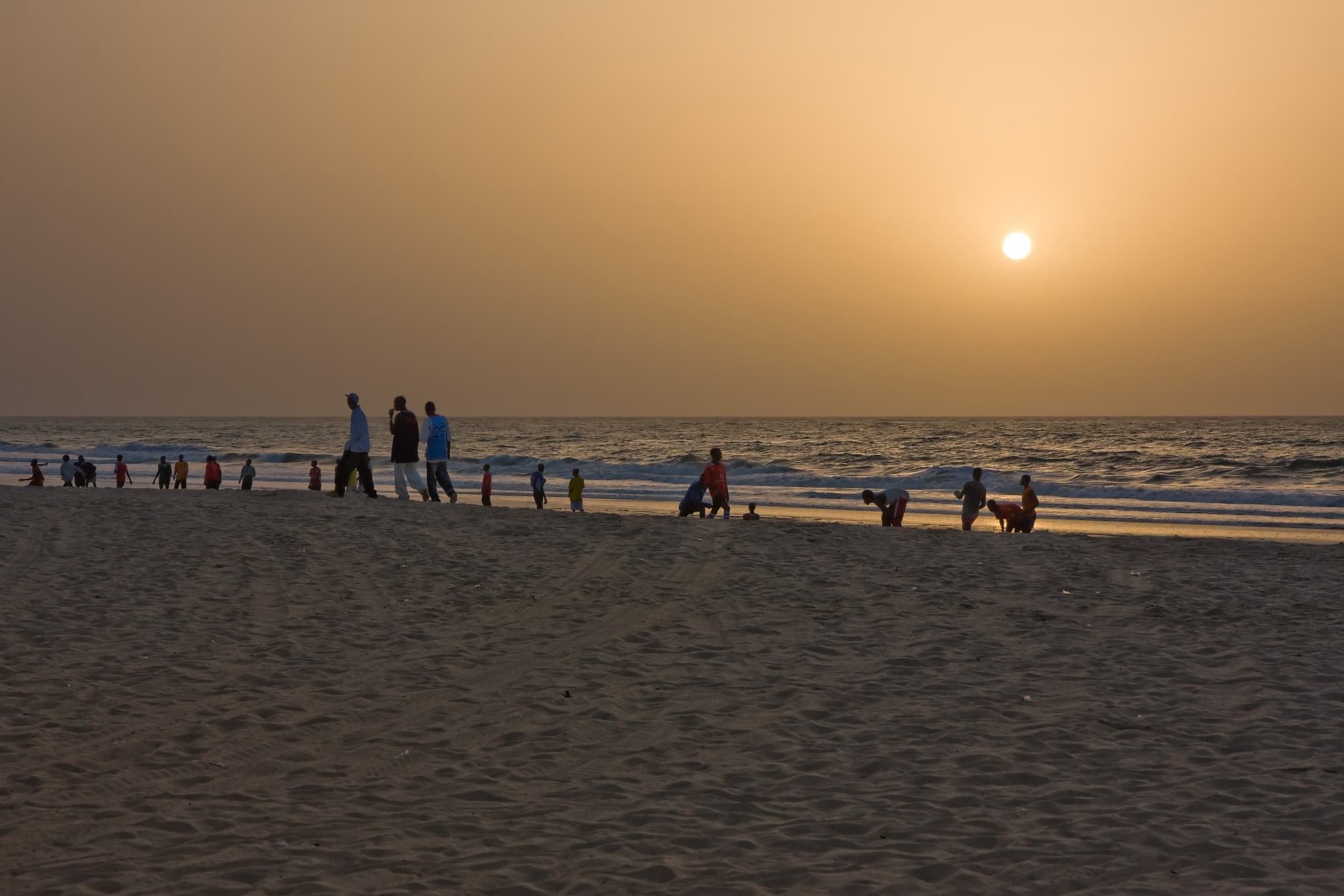
- Day 1 — arrive, settle in, sunset on the beach.
- Day 2 — Banjul city and wildlife tour: Arch 22, Albert Market, Kachikally, Monkey Park.
- Day 3 — beach and a walk into Bijilo Forest Park in the late afternoon.
- Day 4 — the Roots tour to Kunta Kinteh Island, Juffureh and Albreda. A long day.
- Day 5 — recovery day: pool, Senegambia strip, sunset drinks.
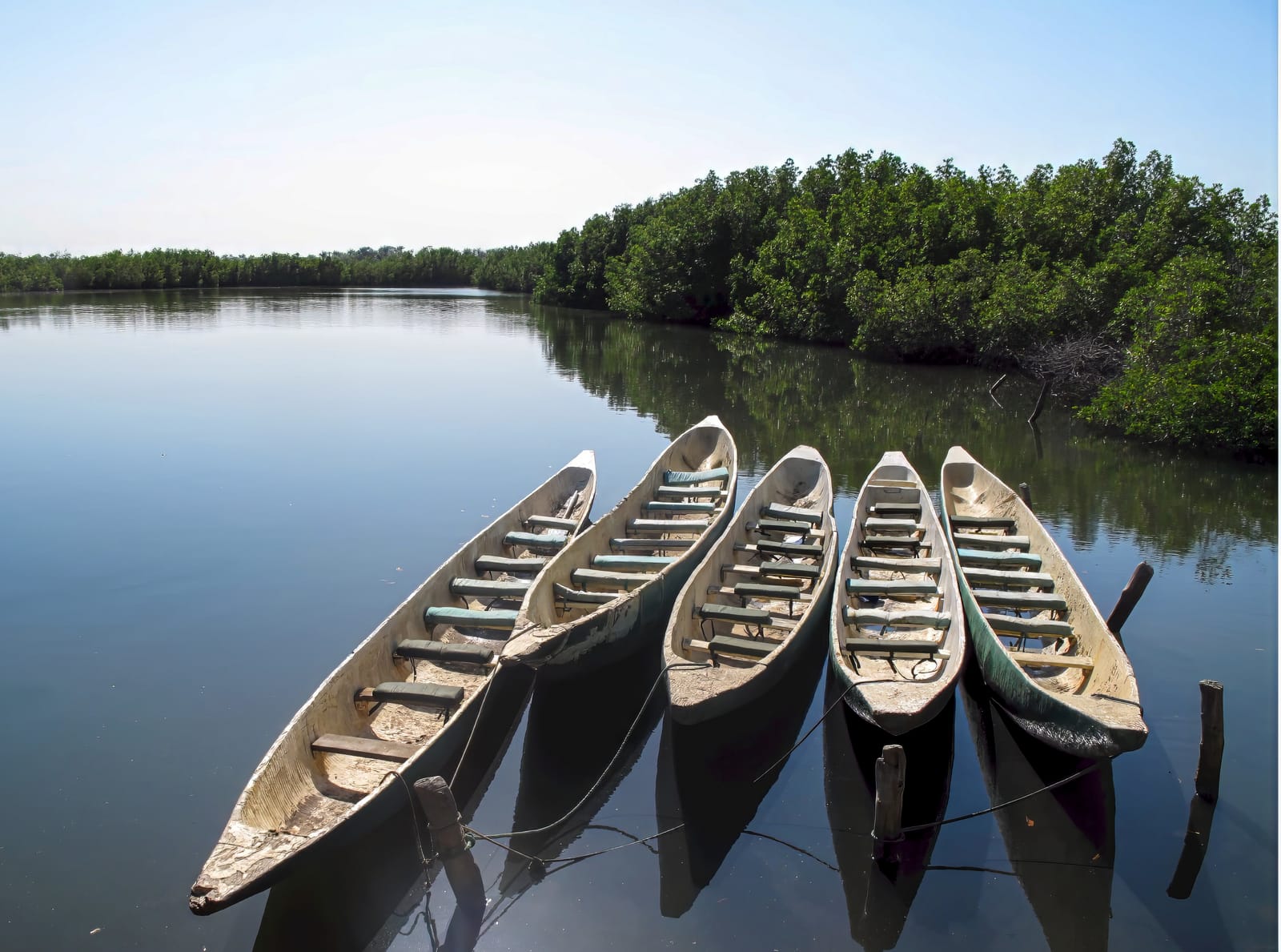
- Day 6 — Makasutu Culture Forest, or a mangrove river cruise.
- Day 7 — Tanji fish market in the afternoon, dinner at a beach bar, last sunset.
Tours that cover this
The easiest way to see it, booked through GetYourGuide:
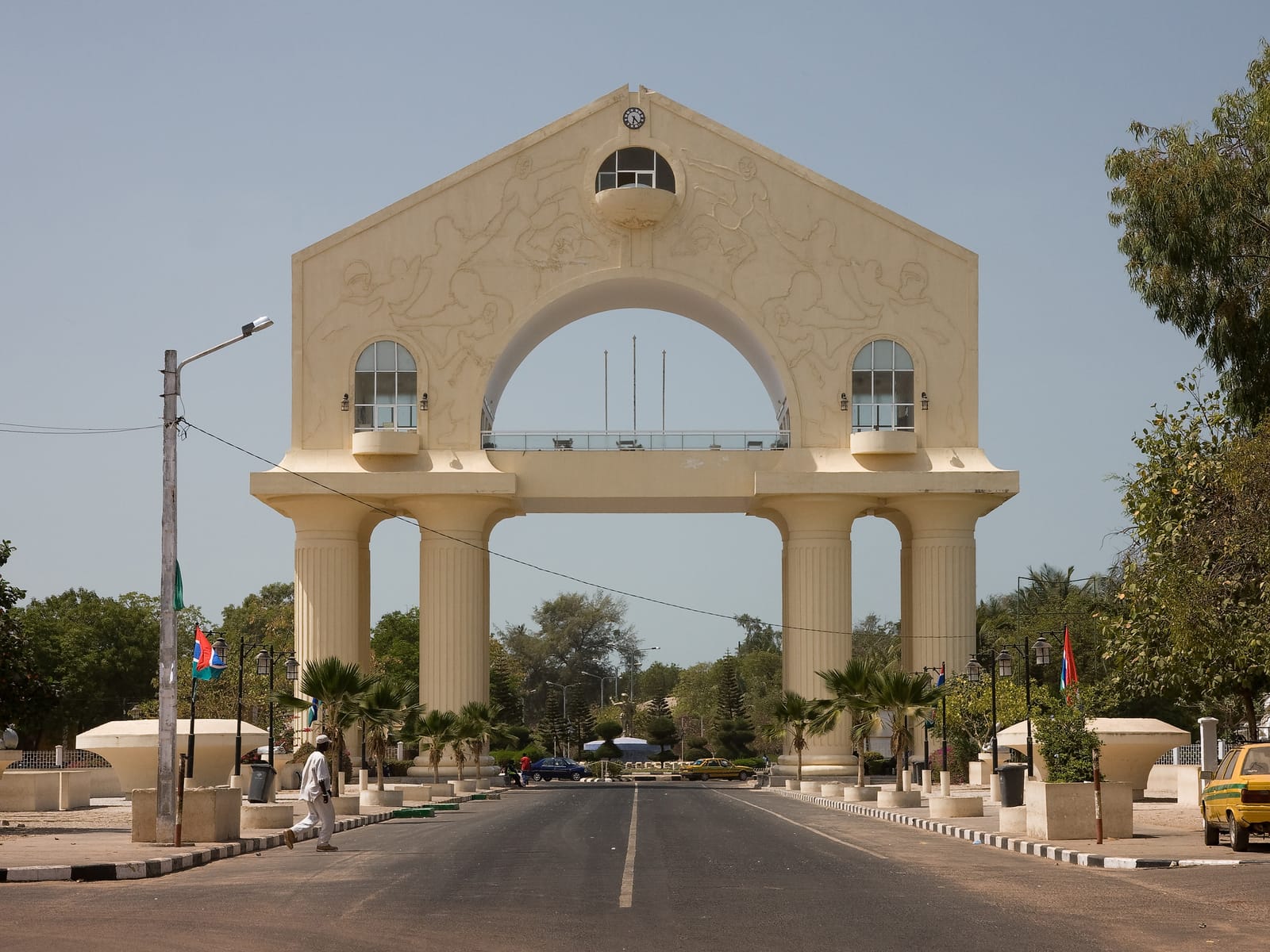 Full-day tour from US$122
 Banjul City & Wildlife Day Tour
- Climb Arch 22 for the best view over Banjul and the river mouth
- Gambia National Museum and the bustle of Albert Market
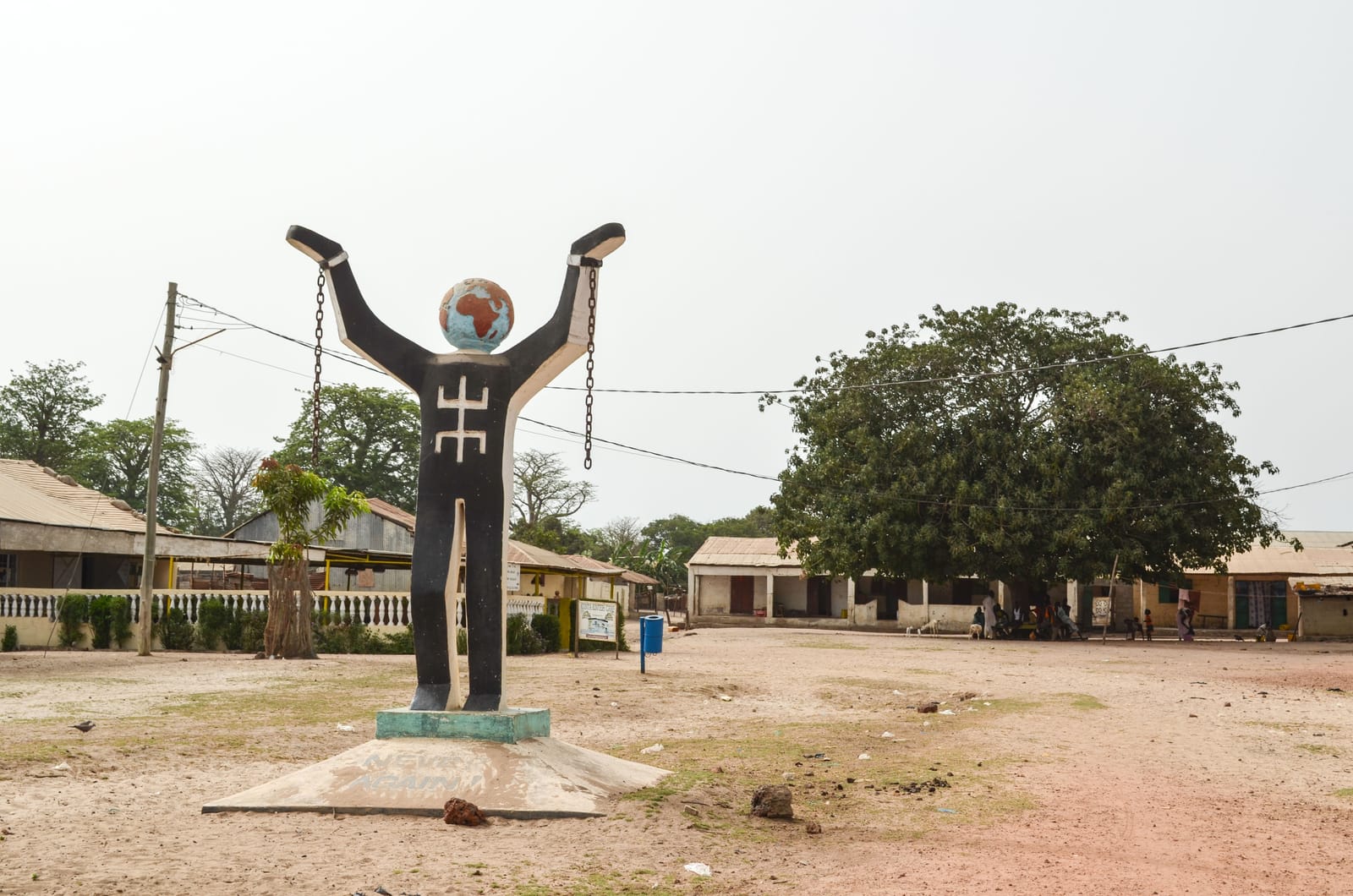 History tour from US$162
 Roots Tour & Kunta Kinteh Island
- UNESCO-listed Kunta Kinteh Island, once James Island slave fort
- Juffureh village, the setting of Alex Haley’s Roots
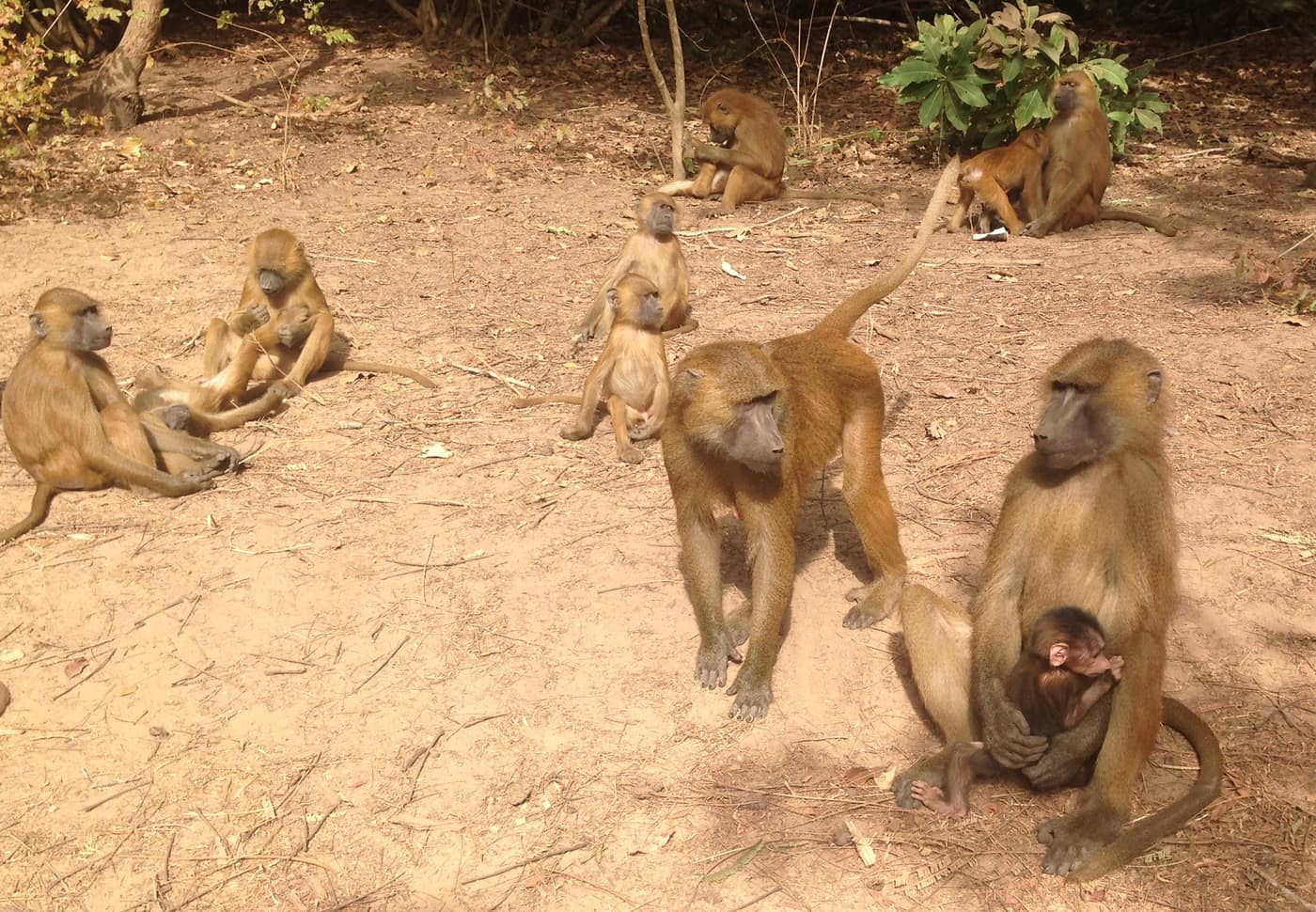 Nature day trip from US$136
 Makasutu Culture Forest
- Dugout canoe through the mangrove creeks of the Mandina bolong
- Walk through palm forest, savannah and baobab groves
Gambia travel FAQ
Is English spoken in The Gambia?
Yes — English is the official language and is used in government, education, hotels and tourism. Mandinka, Wolof, Fula, Jola and Serahule are the everyday languages of home and market.
What currency should I take to The Gambia?
Take euros, pounds sterling or US dollars in cash and change them into dalasi on arrival at a bank or licensed bureau de change. The dalasi is a closed currency and cannot be bought abroad.
Do I need malaria tablets for The Gambia?
Antimalarial prophylaxis is standard advice for all visitors, all year round. Speak to a travel clinic six to eight weeks before departure, and combine tablets with proper bite prevention.
Is The Gambia expensive?
No. Food, transport and tours are inexpensive by European or North American standards; imported goods and beachfront hotels in high season are the exceptions. A week including flights, a mid-range hotel and two or three excursions is comparable to a Canary Islands holiday.
What should women wear in The Gambia?
On the beach and at the hotel pool, whatever you like. In towns, markets and villages, covered shoulders and knees — a loose long skirt or trousers and a T-shirt is perfect, and a light scarf is useful for visiting mosques.
Is there Wi-Fi and mobile coverage?
Wi-Fi is standard in coastal hotels and often slow. Local SIM cards from Africell, QCell or Gamcel are cheap, easy to buy with your passport and give good 4G coverage along the coast; upcountry coverage is patchier.