The Gambia has a single international airport and a single road spine, which makes the logistics unusually simple. The complications are not about where to go but about how long things take: a 300 km drive upcountry is a six-hour day, and the Barra ferry can add two hours to a journey that looks like twenty minutes on a map.
Flights to Banjul (BJL)
Banjul International Airport, at Yundum about 25 km from the coastal hotels, is the only international gateway. It is small, single-terminal and straightforward.
Most European traffic is winter-season charter and scheduled flying from November to April: the United Kingdom, the Netherlands, Belgium, Spain, Germany and Scandinavia all have direct services in season, typically around six hours. Outside the winter season, connections through Casablanca, Istanbul, Brussels, Dakar or Lisbon are the usual routes.
Regional flying connects Banjul with Dakar, Bissau, Conakry, Freetown, Accra, Lagos, Abidjan and Nouakchott, which makes The Gambia easy to fold into a wider West African trip.
Fares behave predictably: highest over Christmas, New Year and February half term; cheapest in the June-to-September rains. Booking three to five months ahead for a Christmas trip is not excessive.
Visas and entry requirements
Entry rules depend on your nationality. Nationals of ECOWAS states, the United Kingdom and a number of Commonwealth and European countries can currently enter visa-free for tourism; other nationalities need a visa obtained in advance or, in some cases, on arrival.
These arrangements are changed by the Gambian government from time to time and are not something to take from a travel site. Confirm with your nearest Gambian High Commission or Embassy, and check your own government’s travel advice, before you book.
You will normally need a passport valid for at least six months beyond your arrival date, proof of onward or return travel, and — if you are arriving from or transiting a yellow fever risk country — a yellow fever vaccination certificate.
Arriving at the airport
Immigration and baggage reclaim at BJL are usually quick, though a full charter arrival can take an hour. There is a bureau de change and an ATM in the terminal; rates at the airport are poorer than in town, so change a small amount to get you through the first day and the rest on the strip.
Outside arrivals you will meet a wall of drivers and porters. If your hotel or tour operator has arranged a transfer, look for your name and ignore everything else. If not, use the official airport taxi desk rather than a freelance offer.
A licensed taxi to Kololi, Kotu or Bakau takes 20–35 minutes. Agree the fare before the bags go in the boot.
Getting around the coast
| Option | Typical use | Cost | Notes |
|---|---|---|---|
| Green tourist taxi | Hotel to beach, town, half-day charter | Fixed zone rates; charter by the hour or day | Licensed, reliable, drivers speak English. Agree the price first. |
| Yellow shared taxi | Short local hops on fixed routes | A few dalasi per seat | Cheap, crowded, perfectly safe in daylight. |
| Gelly-gelly minibus | Town to town | Very cheap | Slow, packed, leaves when full rather than on a timetable. |
| Private driver | Full-day sightseeing, upcountry | Negotiated day rate | Best value for 3–4 people. Ask your hotel to recommend one. |
| Organised tour | Any inland or upriver site | Per person or per group | Includes pickup, guide and fees. How almost everyone travels here. |
| Car hire | Independent exploring | Moderate | Rarely worth it: unlit roads, livestock, checkpoints, no signage. |
Crossing the river: the Barra ferry
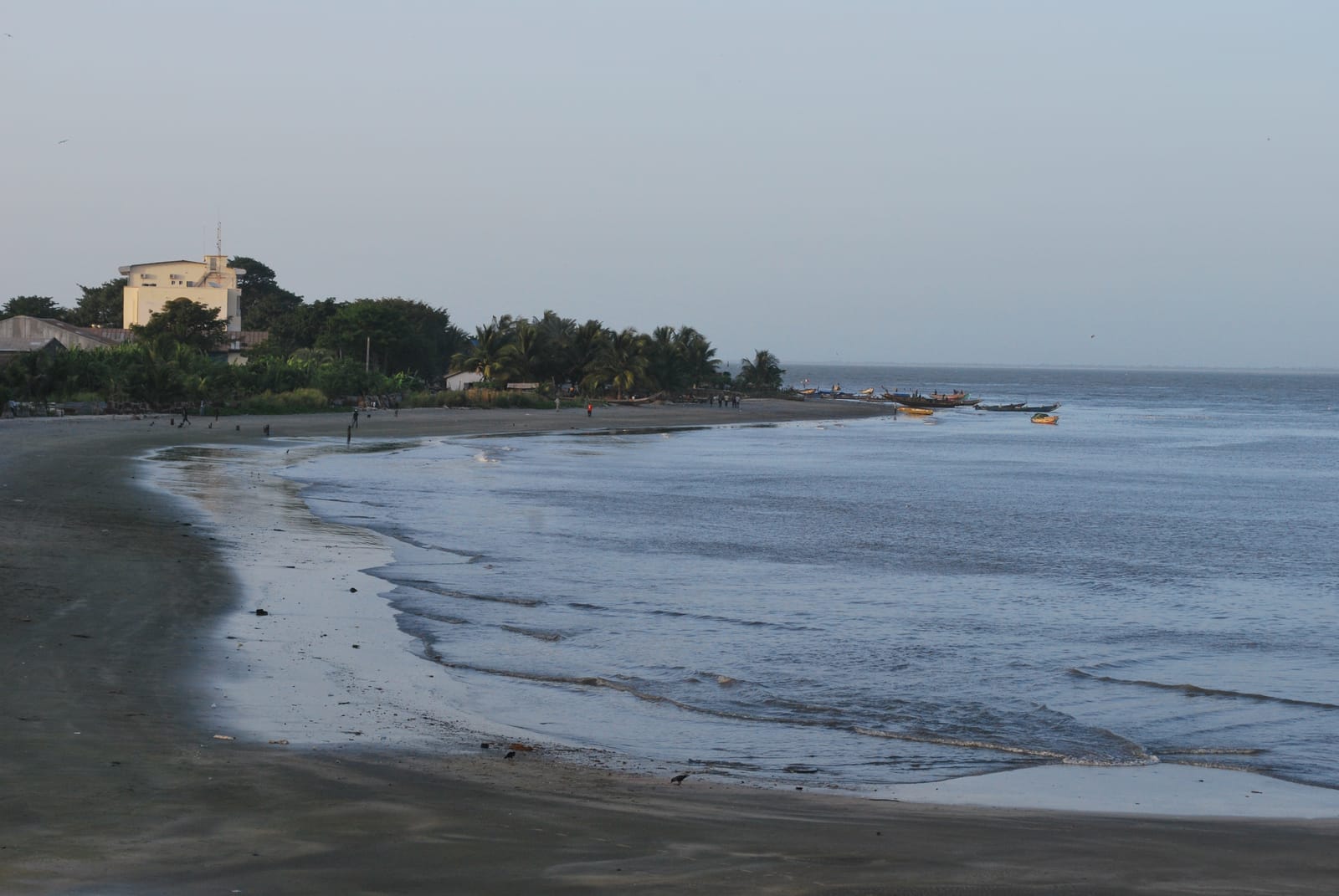
The Banjul–Barra ferry is how you reach the north bank, and it is the single biggest variable in any Gambian itinerary. The crossing itself takes about half an hour; the wait can take considerably longer, particularly for vehicles.
For visitors, this matters mainly for the Roots tour. Organised tours build the wait into the schedule and use foot passenger boarding, which is far quicker than driving on. Some operators skip the ferry entirely by taking a boat up the river from the coast — worth paying a little more for.
Further east, the Senegambia Bridge at Farafenni, opened in 2019, carries the Trans-Gambia highway across the river and has removed a notorious bottleneck for regional traffic.
Going upcountry
The south bank highway runs east from the coast to Basse Santa Su, about 380 km away. It is tarred and in reasonable condition, but the realistic average speed with villages, police checkpoints and livestock is well under 60 km/h.
Janjanbureh, the usual upcountry base, is around 300 km and five to seven hours from Banjul. Nobody should attempt it as a day trip. Two nights is the practical minimum, three is better.
Public transport upcountry means gelly-gelly minibuses and shared bush taxis from Serrekunda’s garages — cheap, slow and an adventure. Most visitors take an organised multi-day trip with transport, lodging and boat excursions included.
Tours that cover this
The easiest way to see it, booked through GetYourGuide:
 Multi-day safari from US$372
 Upcountry Wildlife & Heritage Safari
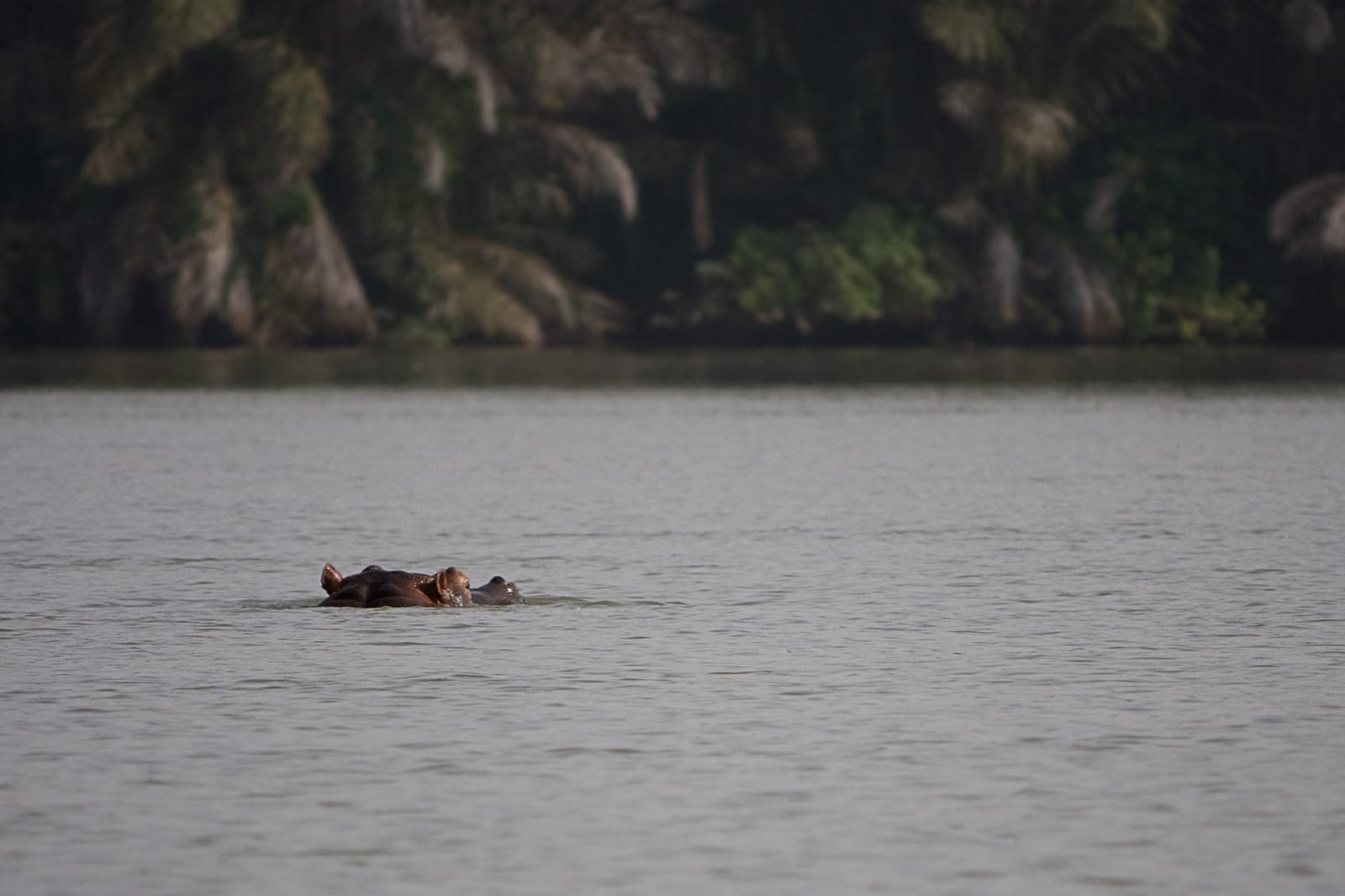
- Boat search for hippos and the wild chimpanzees of Baboon Islands
- UNESCO-listed Wassu Stone Circles
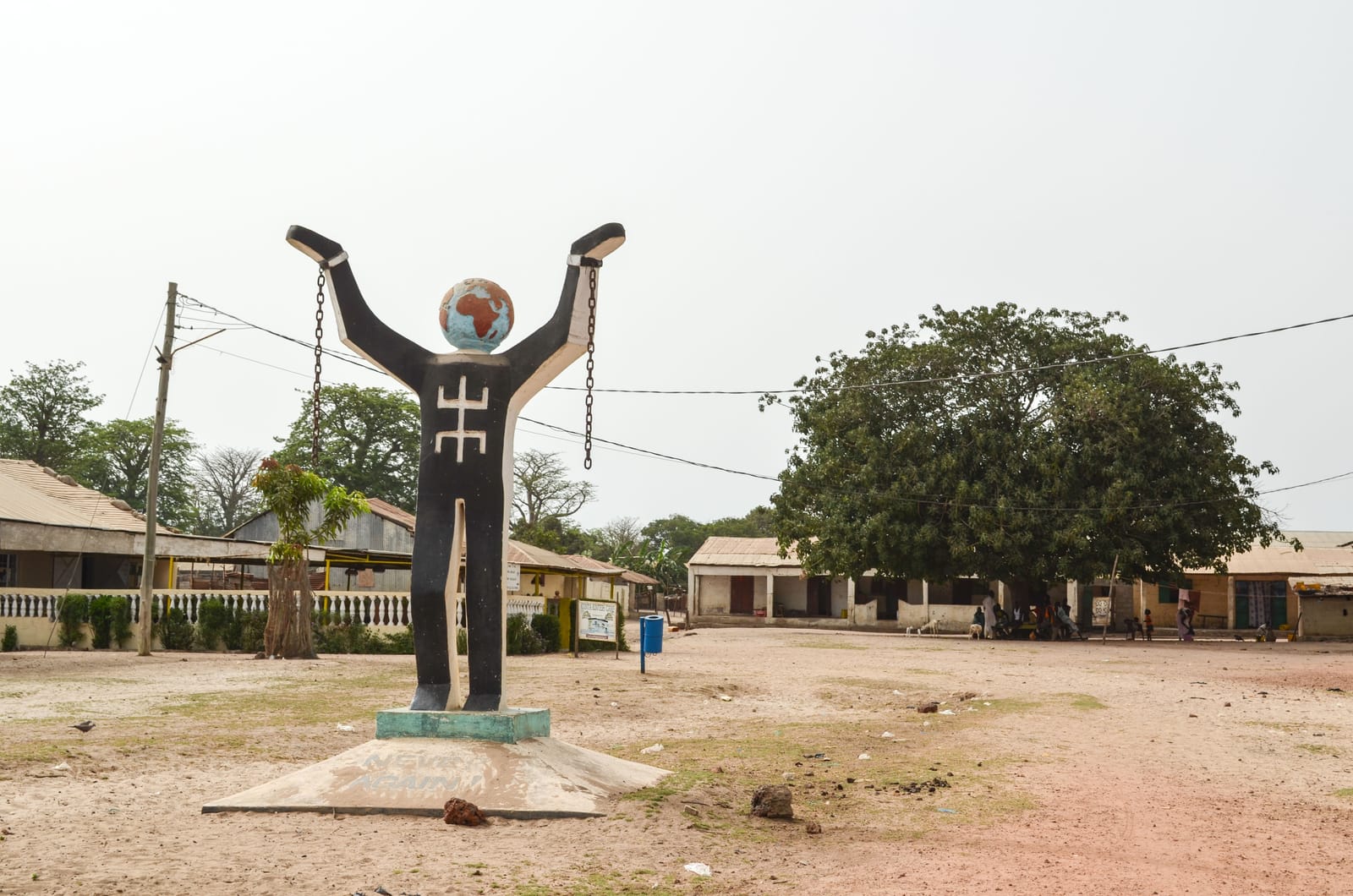 History tour from US$162
 Roots Tour & Kunta Kinteh Island
- UNESCO-listed Kunta Kinteh Island, once James Island slave fort
- Juffureh village, the setting of Alex Haley’s Roots
Getting to Senegal
The Gambia is surrounded by Senegal, and crossing is straightforward with a passport. Dakar is roughly six to seven hours by road via the Trans-Gambia highway and the Senegambia Bridge; the Casamance region to the south is much closer, at two to three hours from the coastal hotels.
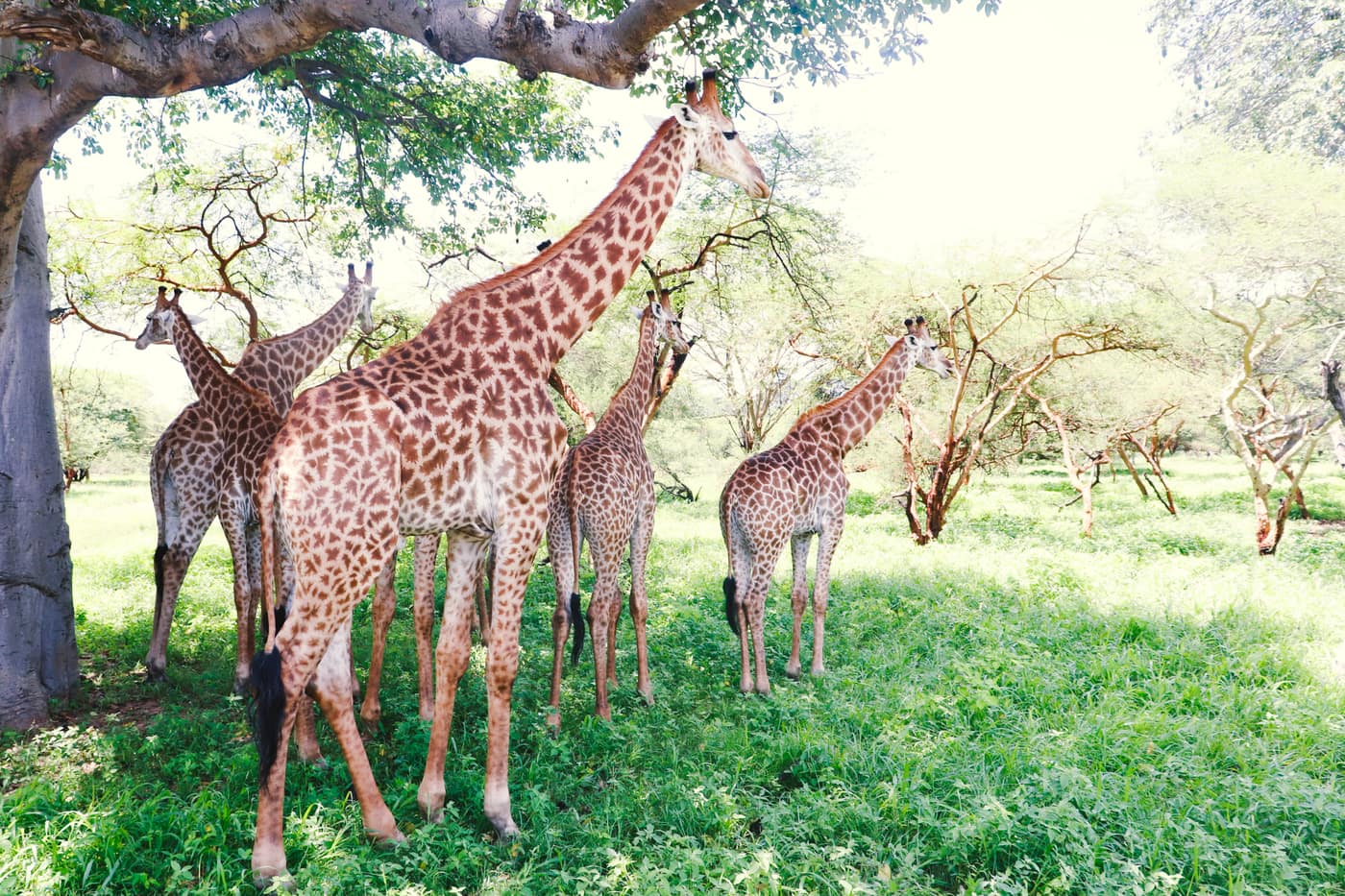
The most popular short crossing is the day trip to Fathala Wildlife Reserve, an hour beyond the Barra ferry, where a guided 4x4 game drive gets you rhino, giraffe and zebra. Tour operators handle both sets of border formalities, which is the main reason to book rather than improvise.
Getting there FAQ
How long is the flight to The Gambia?
Around six hours direct from London, Brussels, Amsterdam or Barcelona. There is no time difference from the UK — The Gambia is on GMT all year.
Which airport do you fly into for The Gambia?
Banjul International Airport (BJL) at Yundum, the country’s only international airport, 20–35 minutes from the coastal hotels.
How do I get from Banjul airport to my hotel?
Pre-booked hotel or tour-operator transfer, or a licensed taxi from the official airport desk. Budget 20–35 minutes to Kololi, Kotu or Bakau and agree the fare before you set off.
Do I need a car in The Gambia?
No, and most visitors are better off without one. Green tourist taxis cover the coast, and every inland site is served by day tours with hotel pickup.
How long does the Banjul to Barra ferry take?
The crossing is about 30 minutes, but queueing — especially with a vehicle — can add an hour or more. Foot passengers move much faster, which is why organised tours use them.
Can I visit Senegal from The Gambia?
Yes. Day trips to the Fathala Wildlife Reserve in southern Senegal are a standard excursion, with the border formalities handled by the operator. Take your passport, not a copy.