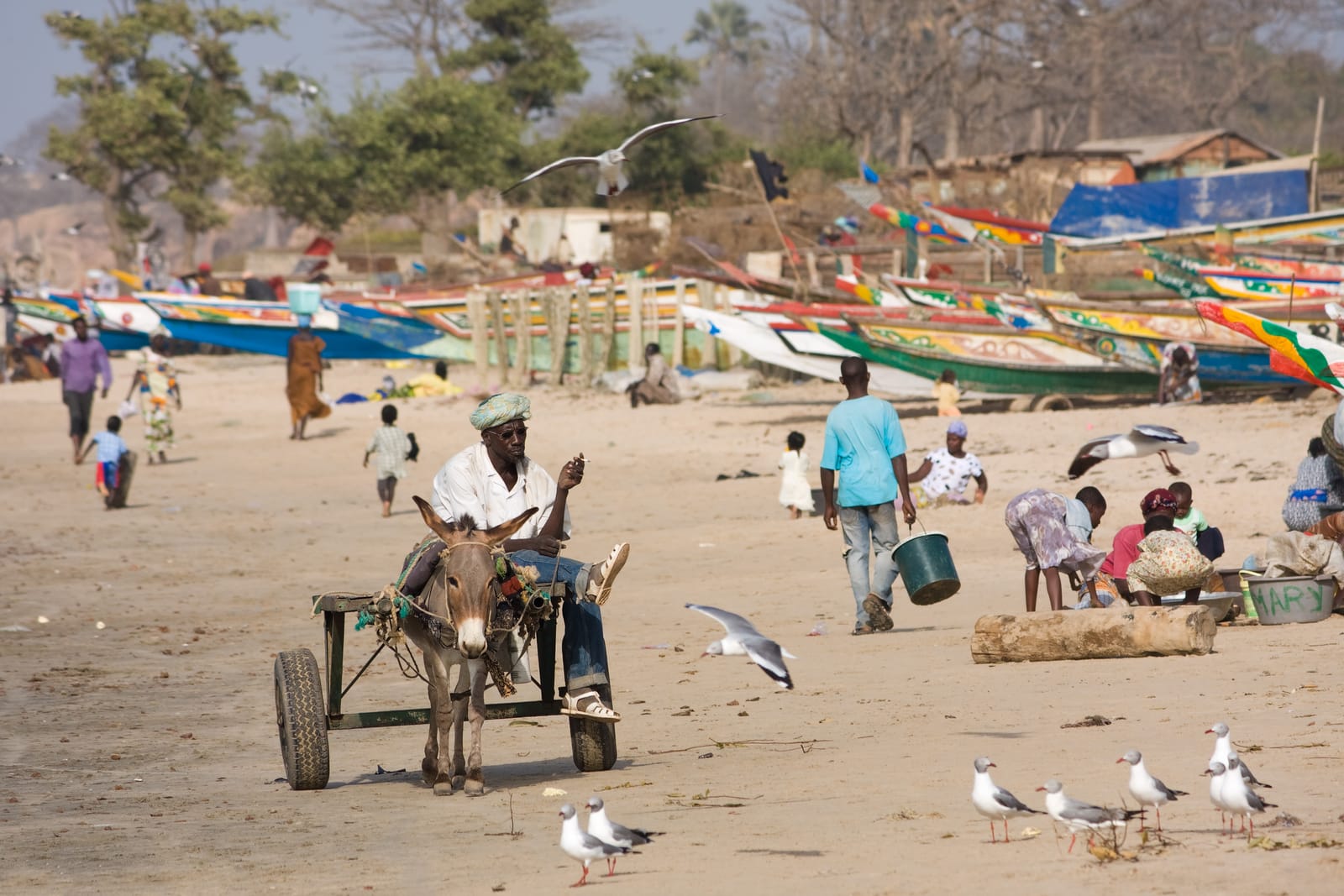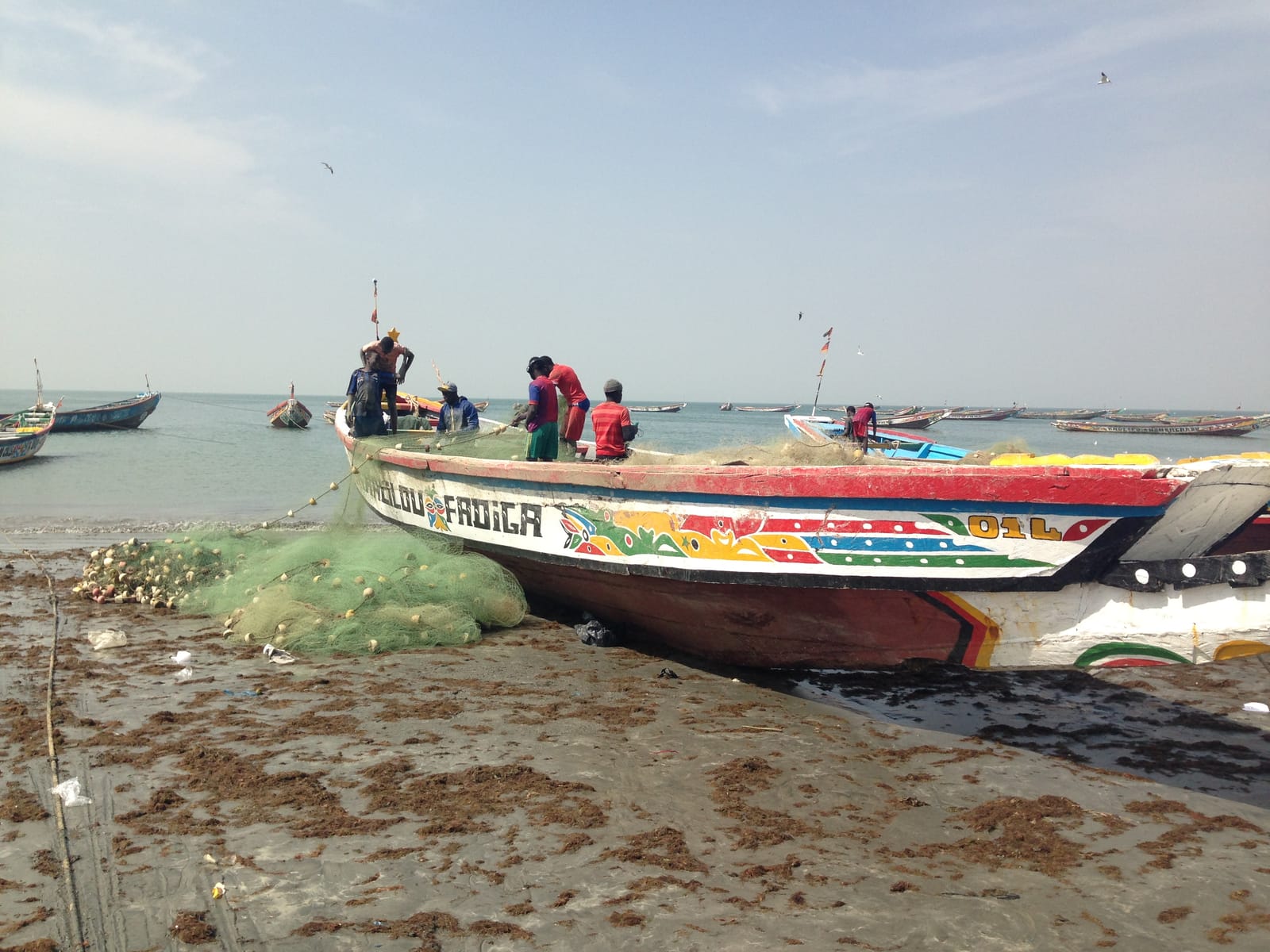
Tanji is the working heart of The Gambia’s coast. Every afternoon a fleet of painted pirogues surfs in through the breakers onto the beach, and within minutes the sand becomes a market: women carrying trays of bonga fish up to the smokehouses, ice being hacked apart, gulls overhead, traders shouting prices, trucks reversing into the surf line.
It is loud, wet, extremely smelly and one of the best hours of photography and people-watching in West Africa. Behind the beach, dozens of long low smokehouses cure bonga for export across the region — an industry that supports much of the village.
Next door is the Tanji River (Karinti) Bird Reserve: 612 hectares of lagoon, dune scrub, mangrove and coastal woodland that hold over 300 recorded bird species, plus the Tanji Village Museum, a small open-air reconstruction of a traditional Mandinka compound.
Top things to do at Tanji
The fish landing
Aim for mid-to-late afternoon, when the boats come in. Ask before photographing individuals; the scene as a whole is fair game and unforgettable.
The smokehouses
Rows of thatched drying racks over slow fires. Hot, smoky and fascinating. A guide from the village will explain the process and the trade.
Tanji Bird Reserve
Lagoon, dune and woodland habitats with terns, waders, ospreys and — offshore — the Bijol Islands, The Gambia’s only true seabird colony and marine protected area.
Tanji Village Museum
A reconstructed Mandinka compound with a small ethnographic collection, craft demonstrations and a shaded café. Quiet, cheap and well done.
The reptile farm
A conservation-focused snake and reptile centre in the area, which does education and antivenom awareness work rather than performance.
How to get to Tanji
- Tanji is about 20 km and 30 minutes south of Kololi on the coast road towards Brufut and Sanyang.
- Green tourist taxis run there readily; agree a return or waiting fee.
- Most half-day cultural tours combine Tanji market with a village visit and the reptile farm.
- The Bijol Islands can only be visited by boat with a permit, arranged through the reserve.
Insider tips
- Timing is everything: the beach is quiet in the morning and chaotic from about 3pm.
- Wear closed shoes you do not mind ruining. The sand at the landing is not just sand.
- Ask before taking portraits, and expect a small payment to be reasonable if you take several.
- The smoke gets in your clothes and stays there. Do not wear anything you love.
- Bring cash for the museum, reserve fee and any fish you inevitably end up buying.
Best tours for Tanji
These top-rated experiences are the easiest way to see Tanji:
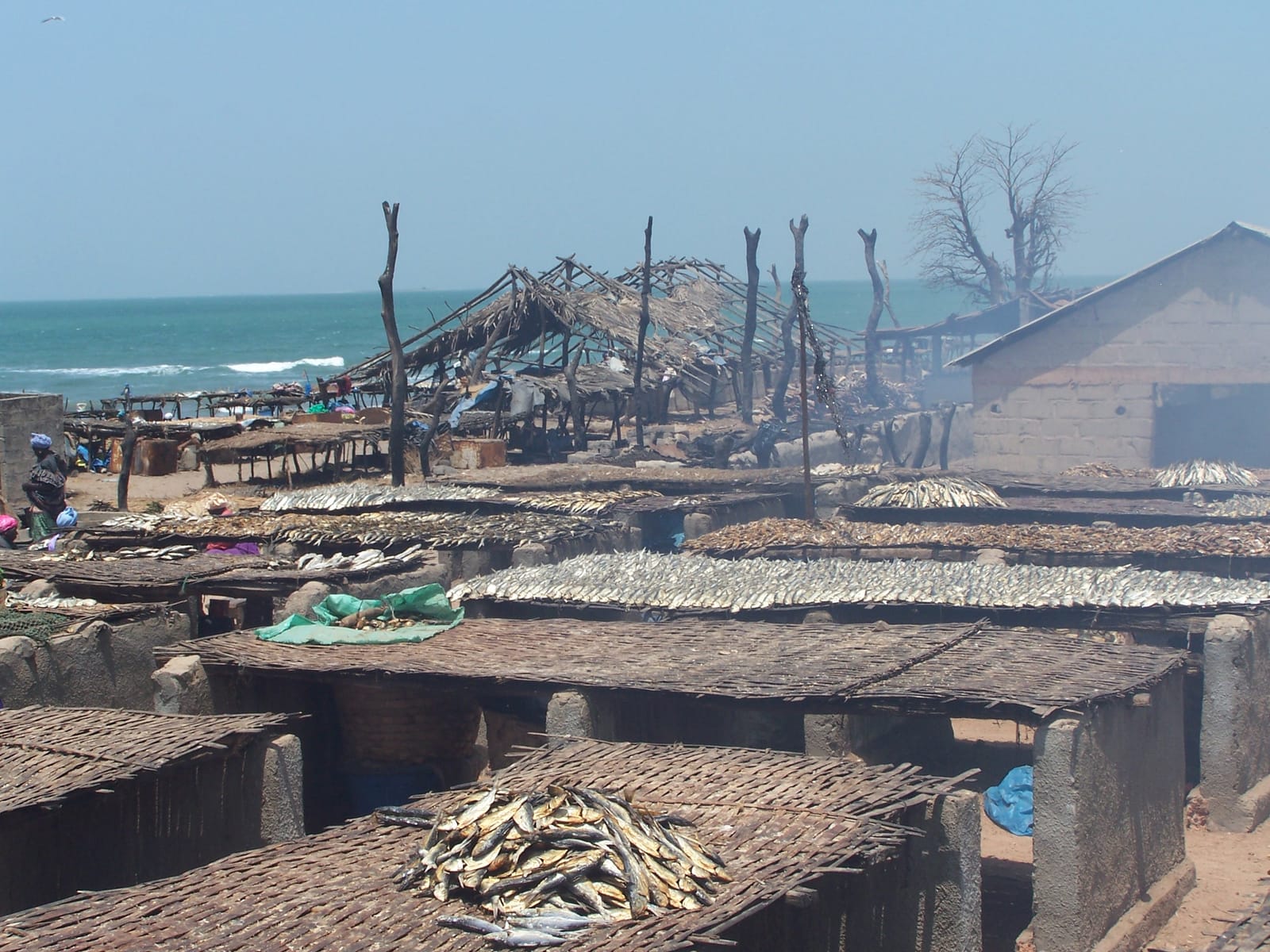 Half-day tour from US$95
 Tanji Village & Fish Market
- Tanji fish market and the smokehouses at their busiest
- A working Gambian village compound, visited respectfully
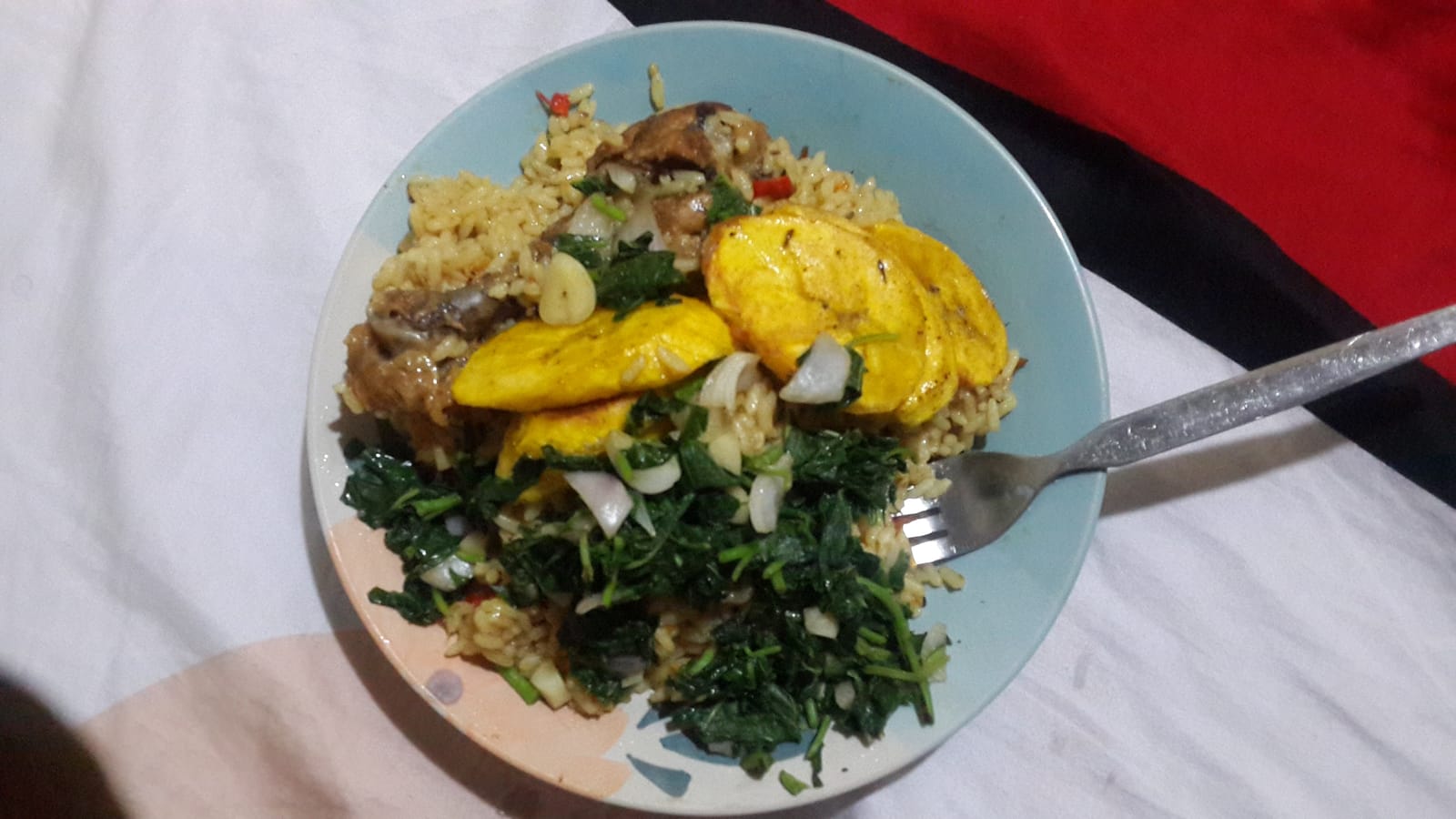 Food experience from US$128
 Gambian Cooking Class
- Shop for ingredients with your host in a Gambian market
- Cook benachin, domoda or yassa from scratch
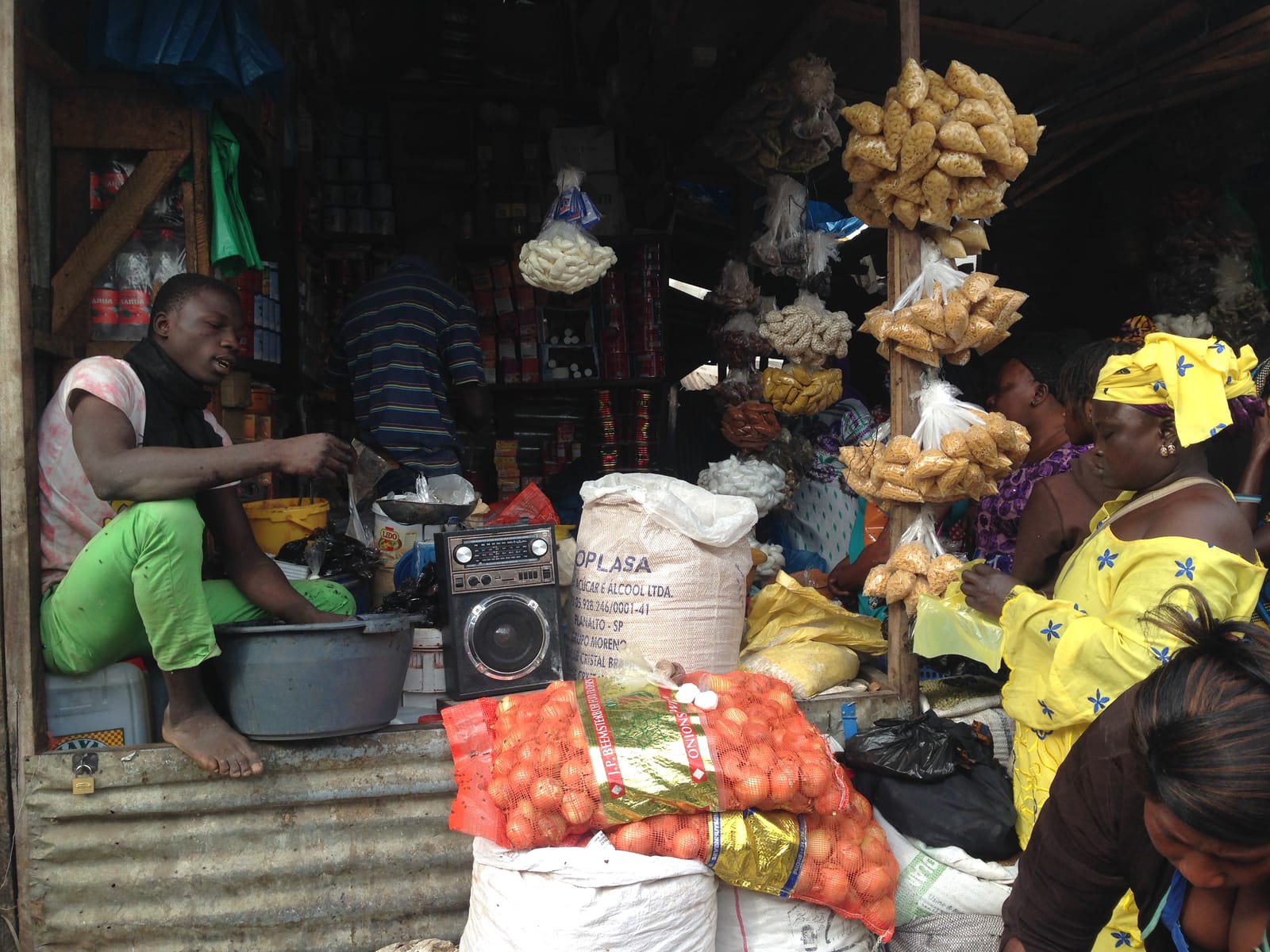 Private tour from US$146
 Private Sightseeing Tour
- Build the itinerary around what you actually want to see
- Serrekunda and Brikama markets, craft workshops, beaches
Tanji FAQs
What time do the fishing boats arrive at Tanji?
Most boats land in the afternoon, broadly between 3pm and 6pm, though it varies with tides and weather. Late afternoon is the reliable window.
Is Tanji worth visiting?
If you have any interest in photography, food or how a country actually works, yes — it is the most vivid hour on the Gambian coast. If you are sensitive to smells and crowds, consider the bird reserve instead.
Can you birdwatch at Tanji?
Very much so. Tanji River Bird Reserve is one of the country’s prime sites, with over 300 species recorded across lagoon, dune and woodland habitats.
Can you buy fish at Tanji?
Yes, straight off the boat or smoked from the racks, at prices that will surprise you. Bring small dalasi notes and expect to bargain.